
Birdland
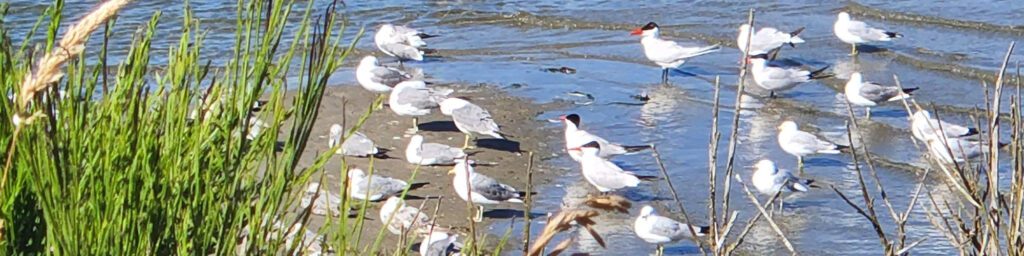
Visiting the Tillamook Coast, it’s clear to see that it’s a veritable wonderland for birds. The songbirds fill our forests. The herons and egrets line our fields and tidal flats. The migrant species crowd our sandy shores. If you don’t have much experience birding and identifying birds, they all might seem like feathered and floppy specks in the distance. But with a little preparation and a bit of study, you can become a Tillamook Coast Bird Expert in no time!
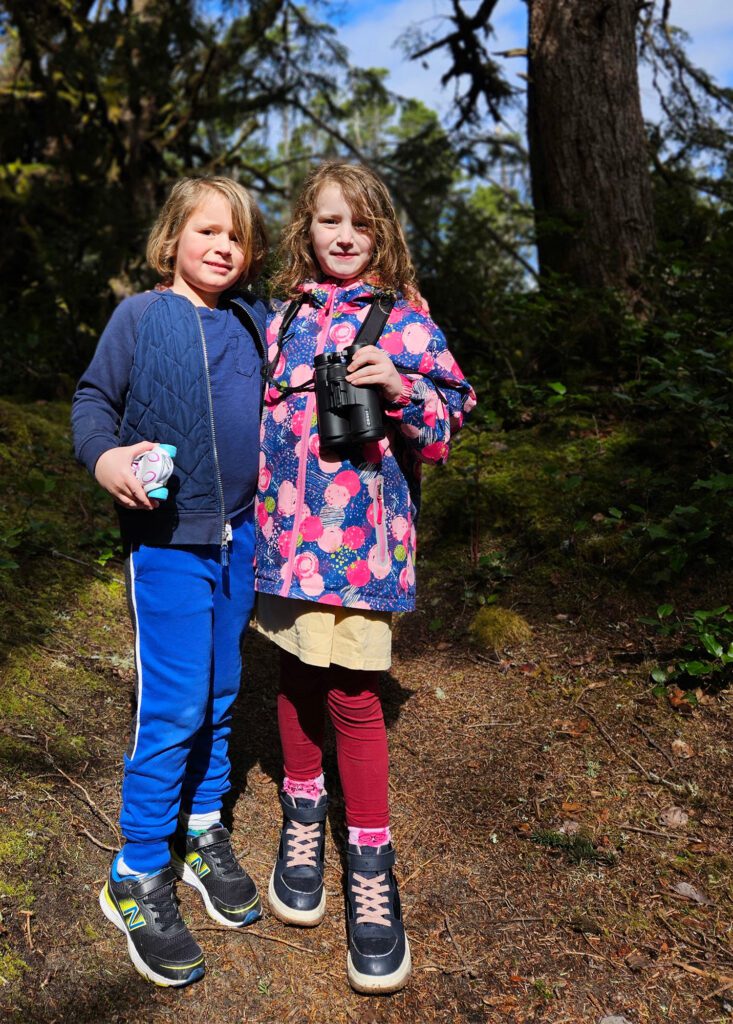

I love birding because it can be done virtually anywhere and at any time with no equipment needed — from your window, your walk to the park, and even from the grocery store parking lot! But you can “up” your bird game with a few simple tweaks that don’t require much investment and can potentially have a huge impact.
- Binoculars, either 8x42mm or 10x42mm – the first number means magnified 8 times or magnified 10 times. The second number is the objective lens diameter. Higher magnification (like 12x or 20x) might give you a closer look at the subject, but it’s a much smaller field-of-view and can be hard to spot the item you are looking for. Larger lenses (like 50mm) might gather more light, but the binoculars also get heavier. I find that an 8×42 model or a 10×42 model is a sweet spot for birding comfort and success! Typically under $100
- Birdwatching App, like Merlin Bird ID, will completely transform how you do bird business. It has features like Bird ID, where you put in characteristics of a bird you see (smaller than a Robin, brown and yellow, at a feeder, etc) and it will give you a list of possible bird matches based on your location and time of year.
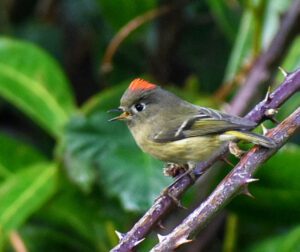
Ruby Crowned Kinglet Game changer! They also have a sound ID, where you hit the button and allow your phone to pick up the bird sounds it can hear around you, and it sends you a list of bird matches based on bird song it can hear. Early in my birding journey, I’d love laying in bed at night, perusing the app, searching and studying all potential birds in my area. I’d study migration maps and sighting maps and the time of year each bird is found in my area. I’d listen to recordings of bird songs over and over (and over!). You often identify birds first by SOUND and then by SIGHT, so it was worth my time to pour over the sound recordings included in my Merlin App in the comfort of my home so I could be better prepared while out in the field. Also, this app IS FREE!!!
- Weather Reports & Tide Charts – always important before you head out on the Tillamook Coast. Certain tides and certain weather conditions are more conducive to certain bird sightings. I love the Tide Charts app because it shows a visual of the tide and lets you pick from a variety of nearby locations for tides and weather. This is also free or $1.99 without ads.


The Right Spot to Spot
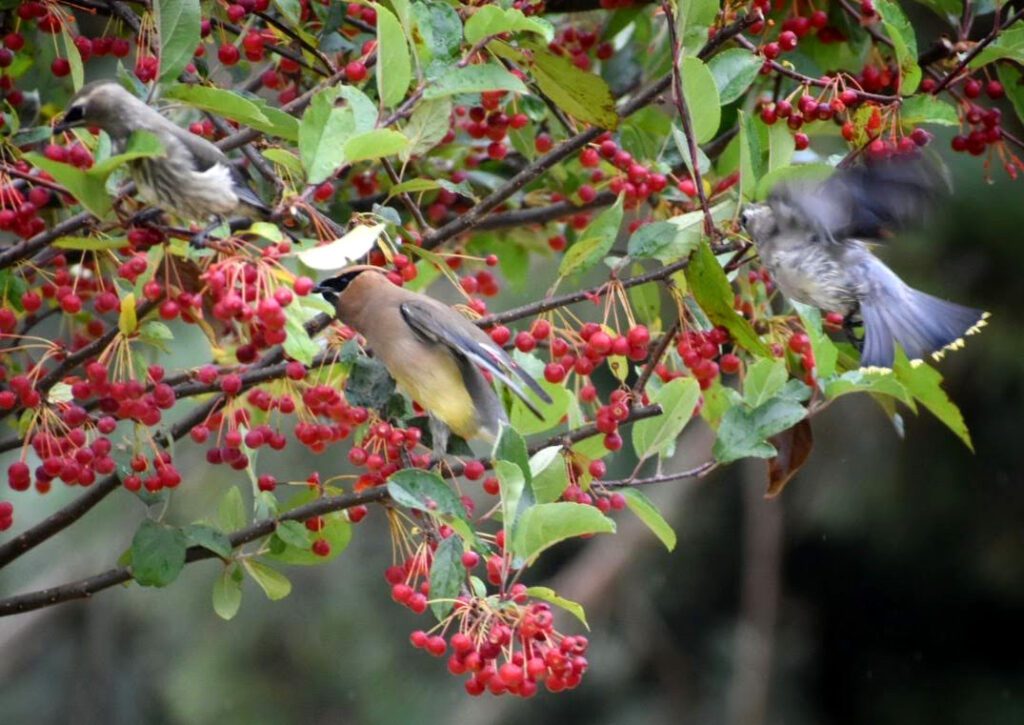
The Tillamook Coast has some of the best locations in the state for birding, and the perfect site to set your sights on will really depend on what you are hoping to find. Here are a few of my favorites (and some hints for finding sought-after species!).
- Bayocean Spit – Best spot to catch a variety of species all in one place (songbirds, waterfowl, shore birds, etc). This is also the ONLY LOCATION I have ever found Wrentits. Study their call, and then head out on the sandy paths that connect the bay to the ocean. Watch the bushes and scrub to hopefully see them hopping from branch to branch.
- Fish Peddler parking lot & peninsula into the Tillamook Bay in Bay City. What can I say? I love a parking lot bird! This is an excellent location for those with limited mobility who want to stay in their car to watch for birds. There is a great view of the bay and lots of songbirds gather on the short peninsula that sticks out into Tillamook Bay. My favorite things about this site are the Purple Martins that show up from South America in April and stay until their fledglings are ready to fly back south in September. Park in the lot and walk down the grassy path on the peninsula into the bay. At the end of the bay you will find birdhouses over the water, hopefully filled with many buzzing Purple Martins! Purple Martins will come back to the same location year after year, and it’s fascinating to watch generations of birds show up each spring.
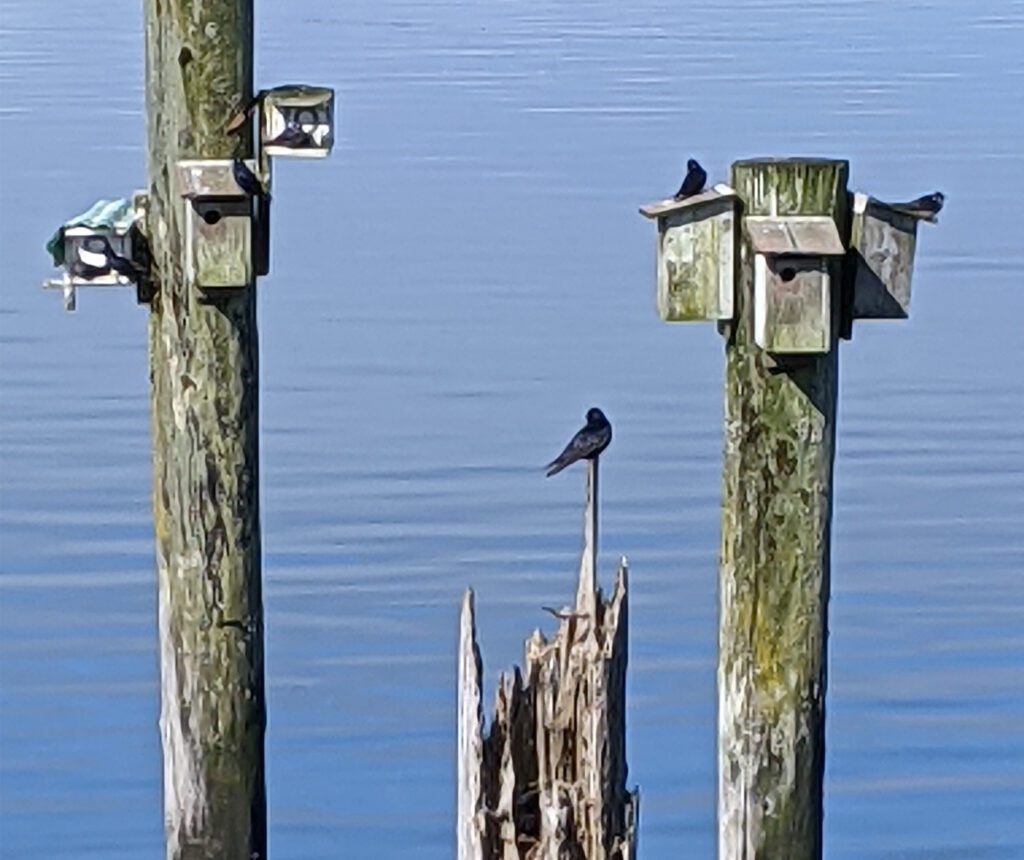
Purple Martins - Tillamook Bay Wetlands area – At the end of a gravel Tillamook county road, you’ll find the Tillamook Bay wetlands area. It is not an official park and you’ll have to drive through active farms and dairies to get here, so please respect the locals. Once you arrive, park and head down the trail/dike road that winds through pastures and rivers. I’ve seen so many special species here, including Bald Eagles raising chicks, Ospreys raising chicks, Greater Yellowlegs foraging in the slough, White-tailed Kites hovering, and Marsh Wrens singing from the marsh grasses. This is another great location to bird from your car. Drive slowly along the gravel roads on your way to the parking area and look for Black Phoebes near the bridge over the Wilson River. It’s not a bird, but I have been lucky enough to spot a North American Beaver at this site, as well!

The Best Conditions
The best conditions for birding depend on the type of bird you are looking for. The waders and shore birds love to forage and I find that I have the best luck a few hours before a low tide. Birds need to eat rain or shine, so don’t let a rainy Tillamook day deter you from birding. Waterfowl are not bothered by some raindrops! Many experts agree though that the best time of day to head out is early morning or early evening. At these times, birds are active and singing, foraging and feeding, and you’ll have the best chance at spotting them.
But HOW DO I Birdwatch?
Now that you have the gear and your location picked out, HOW do you actually birdwatch? First, pick a location and walk quietly along. Often, you need to use your ears before your eyes. Use an app to identify bird calls, and then use your eyes to locate them where they like to hang out. For example, you might know Sandpipers will be on the ground in a group at the edge of the water, or Cooper’s Hawks and Belted Kingfishers hang out on wires, or Pacific Wrens like to hop through the understory of a forest. Use that knowledge to train your eyes to pay attention to certain spots. Stay in one location for a while and the birds will often come to you!

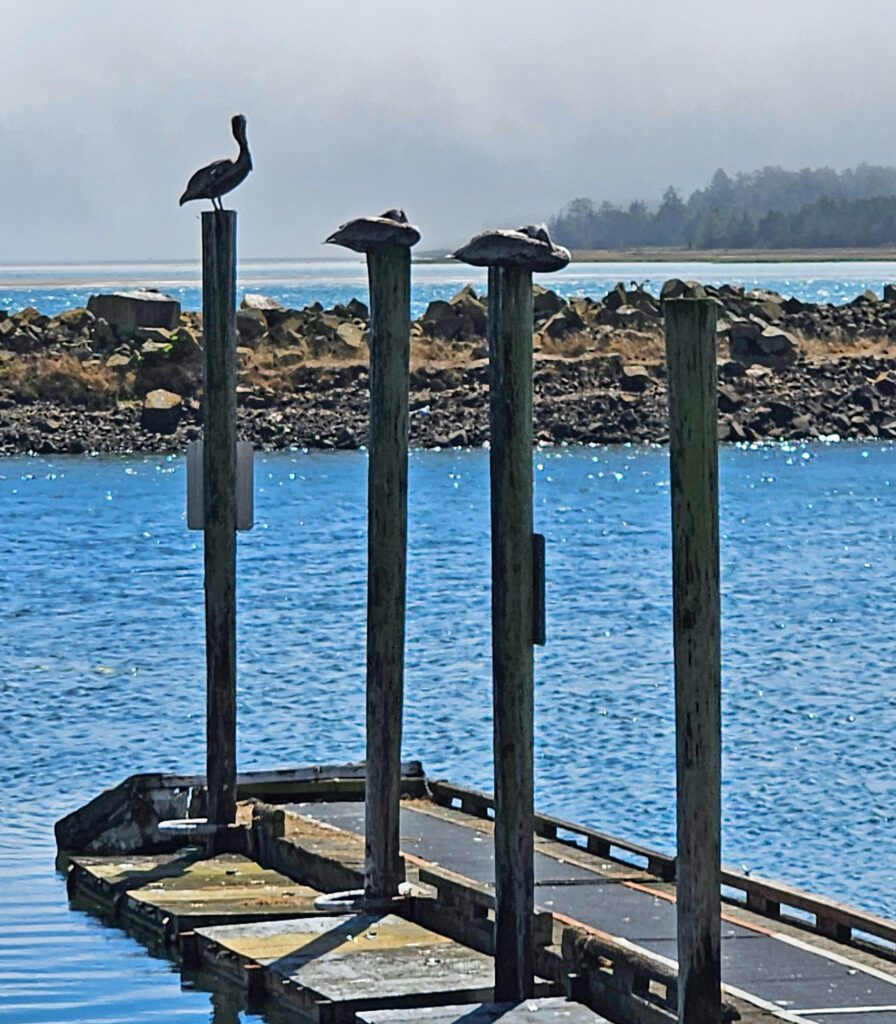
Use high quality binoculars to get good views of birds on offshore rocks, in groups on the water, or roosting in trees. There are often mixed flocks floating on the bays on the Tillamook Coast so what you think is a large group of Buffleheads might also contain some pairs of Surf Scoters! Think like a scientist — what do you notice? What stands out? Does anything seem odd?
My daughter once found a rare Heermann’s Gull mixed in with a flock of the usual Pacific Gulls that inhabit our beaches. She was 5. She was watching and looking for differences and mentioned that “this one has a different face than the others around, and doesn’t look like a young gull like the other young ones in the flock.” I found the gull she was talking about, put it into my Merlin App, and confirmed she was right — a rare species hidden in plain sight!
Stay quiet! Tell those in your group (kids and dogs included) to tiptoe and focus, and use “deer ears” (hands cupped behind ears in direction of the sound) to hone in on a bird call. Bird blinds are sometimes located at trails and wildlife refuges, and they can be useful to stay hidden while you watch the action. You can also use your car as a birdblind depending on where you park!
So much of birdwatching is good timing and good luck. Even if you don’t get to spy plentiful bird action, if you find yourself quietly walking along a stretch of sand or trail on the Tillamook Coast, then I call that a success. Happy birding!