

Spotting a whale
You will have a better chance of spotting a whale in the morning light with the sun at your back. First scan the ocean for spouting and then zoom in closely with binoculars. Don’t be deceived by driftwood or other inanimate objects floating in the water. Whales are big and certainly a little slower than dolphins or small fish, but they are active! They’ll be spouting, breaching, diving and surfacing—not drifting along. Thankfully, this makes it a little easier to pick them out among the waves.
To get an even closer view, consider whale watching from a charter boat; Linda Sue III Charters in Troller and Garibaldi Charters are good options.
While a boat trip can be a fantastic experience, you should do all you can to stay safe and practice ecological responsibility. Pay attention to whale behavior and don’t get too close. Changes in an animal’s actions, for example an abrupt shift in their swimming patterns or a lot of tail-slapping on the water’s surface, could be a sign of distress. Make sure the boat gives animals a wide berth to avoid startling them and prevent crashes. Finally, though it can be thrilling to get up close, don’t touch or feed the whales. Not only are they wild animals (and thus unpredictable), they can pick up diseases from your touch and get sick from—or even become dependent on—human food. In fact, research has shown that the very presence of boats and human activity disrupts whales’ natural eating, sleeping and socializing habits! So, be respectful and keep your interactions hands-off, and limit your time to under an hour.
Come to Tillamook County for a whale of a good time…
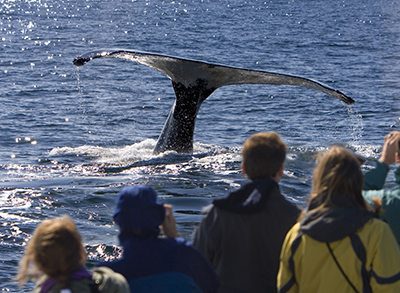
Whale migration patterns
Gray whales migrate south from their feeding grounds in Alaska from mid-December through January making their way to their breeding grounds in Baja California. From late March to June the whales migrate north back to Alaska.
On each trip, approximately 18,000 gray whales will pass through Oregon coastal waters. During their Southern migration peak, about 30 whales will pass by per hour, and can be seen about five miles off shore.
Coming back, the whales travel at a leisurely pace staying within a half mile of the shoreline. Mothers with their young appear in May; just in time for Mother’s Day.
Learn more about whale migration patterns from Oregon State Parks.

Enjoy from afar
There are some excellent areas in Tillamook County to view whales without getting in the water yourself:
- Neahkahnie Mountain at the historic marker turnout on Hwy 101,
- Cape Meares
- Cape Lookout State Park (a 2.5 mile hike to the tip of the lookout)
- Cape Kiwanda
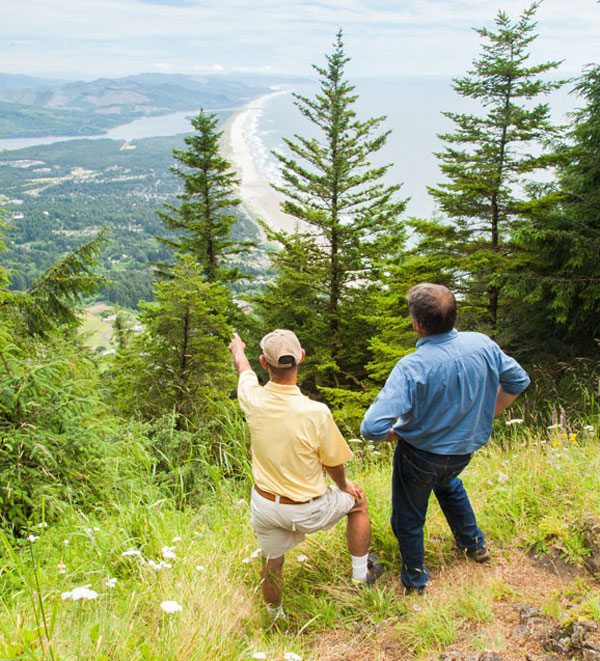
With a little legwork, you can hike up to a good vantage point over the water. Scope out a spot with a clear view and get ready to play an awesome game of “I spy”!